
HEBRARIUM

Marley opened a door.
The market turned the doorway into merchandise.
Reggae and cannabis are genuinely connected.
The cliché begins when people stop there.
Jamaican reggae carried ganja into global sound, not as a marketing prop but through history, poverty, colonial memory, Rastafari, policing, migration, resistance, bass, drum, voice and community. The connection is real. It is not invented by festivals or rolling-paper brands.
But it has also been flattened.
For many people outside Jamaica, cannabis culture became visually and musically reduced to three colours, a leaf, a dreadlock, and a Bob Marley song played at the wrong volume in the wrong context.
That reduction is lazy.
Reggae deserves better.
Cannabis deserves better.
The history is richer than the cliché.
Reggae emerged from Jamaican musical and social life: ska, rocksteady, sound systems, Kingston, poverty, politics, Rastafari, Black consciousness, spiritual longing, dance, street commentary and postcolonial pressure. UNESCO recognised reggae music of Jamaica as intangible cultural heritage in 2018, noting its role in social commentary, resistance, love, humanity and spiritual practice.
Ganja belongs inside that world, but not as the whole world.
In Rastafari, cannabis has often been treated as a sacramental herb connected with meditation, reasoning and spiritual practice. The Associated Press notes that Rastafari use of marijuana has also brought persecution, profiling and imprisonment over decades.
That detail matters.
For some people, ganja was not a party symbol.
This is where the reggae-cannabis connection becomes serious. The plant is not floating above the music. It is tied to the same social history: race, class, colonial inheritance, religious suspicion, police pressure and cultural survival.
Then comes Bob Marley.
But he made all three globally visible in a way no one else did.
His image travelled farther than the history behind it. That is both the miracle and the problem. The face became a banner. The banner became a poster. The poster became a dorm-room object. The object became a shortcut. And the shortcut became the cliché.
Britannica’s account of Marley is useful here because it does not reduce him to cannabis. It frames him as an artist whose music moved through rhythm and blues, rock and reggae while carrying unusual narrative and emotional force. It also notes how reggae was repackaged for a rock market partly curious about marijuana and Rastafari.
That is the exact LIBERA HERBA point.
Marley opened a door.
The market turned the doorway into merchandise.
The world heard the songs, but often bought the image.
This does not make Marley smaller.
It makes the afterlife of Marley more complicated.
The cannabis world often uses reggae as a default atmosphere. Events, shops, festivals, rolling papers, seedbanks and lifestyle brands reach for reggae because it feels instantly recognisable: relaxed, green, sunny, rebellious, non-threatening, “rootsy”. It signals cannabis without needing to explain anything.
That is precisely the problem. When a cultural signal becomes too easy, it stops teaching.
Reggae is not background music for cannabis commerce.
It is a musical tradition with its own history, politics, theology, joy, pain, genius and contradictions. Ganja is part of that history, but not permission to reduce the whole tradition to smoke.
For LIBERA HERBA, the correction is simple: acknowledge the connection.
Cannabis culture can listen to reggae without turning it into wallpaper.
It can mention Marley without making him a logo.
It can understand ganja without pretending every cannabis gathering needs a reggae soundtrack.
The plant deserves knowledge, not noise.
And reggae deserves to be heard as music, not used as a costume.
Marley opened a door.
The market turned the doorway into merchandise.
Bob Marley is unavoidable.
Not because cannabis history needs a saint, but because global cannabis imagery cannot be understood without him.
Marley’s music carried Jamaica, reggae and Rastafari into the world with extraordinary force. His association with ganja was real, rooted in Rastafari practice and in a wider history of criminalisation, racial suspicion and cultural resistance. But the global market often kept the easiest part of the image and lost the harder part of the history.
That is how an icon becomes a shortcut.
For LIBERA HERBA, Marley should not be used as decoration.
He should be read as a turning point: the moment when reggae, ganja and Rastafari became globally visible — and also globally simplified.
When a cultural signal becomes too easy,
it stops teaching.
The problem is not that cannabis culture mentions reggae.
The problem is that it often stops thinking there.
Red, gold, green, smoke, dreadlocks and Marley posters became an easy global shorthand for cannabis, flattening a complex Jamaican cultural history into instant atmosphere.
Reggae deserves to be heard as music,
not used as a costume.
Reggae is not a generic cannabis soundtrack.
It is a serious musical tradition recognised by UNESCO as intangible cultural heritage, with deep social, political, spiritual and artistic functions.
Cannabis culture should not use it
as background decoration.
An icon should open the archive,
not replace it.
Marley matters, but he should not erase everyone else.
Peter Tosh, Bunny Wailer, Burning Spear, Culture, Lee “Scratch” Perry, Max Romeo, Black Uhuru and many others belong to the wider story.
Cannabis culture often remembers the easiest face
and forgets the ecosystem.
Factual Note
Reggae music of Jamaica was inscribed by UNESCO in 2018 on the Representative List of the Intangible Cultural Heritage of Humanity. Ganja has a long history in Jamaica and is closely associated with Rastafari practice, where it has often been used sacramentally; Rastafari communities have also faced persecution and profiling related to cannabis use. Bob Marley made reggae and Rastafari globally visible, but later commercial culture often simplified his image into a cannabis cliché. LIBERA HERBA treats reggae as a real cultural connection, not as automatic cannabis background music.
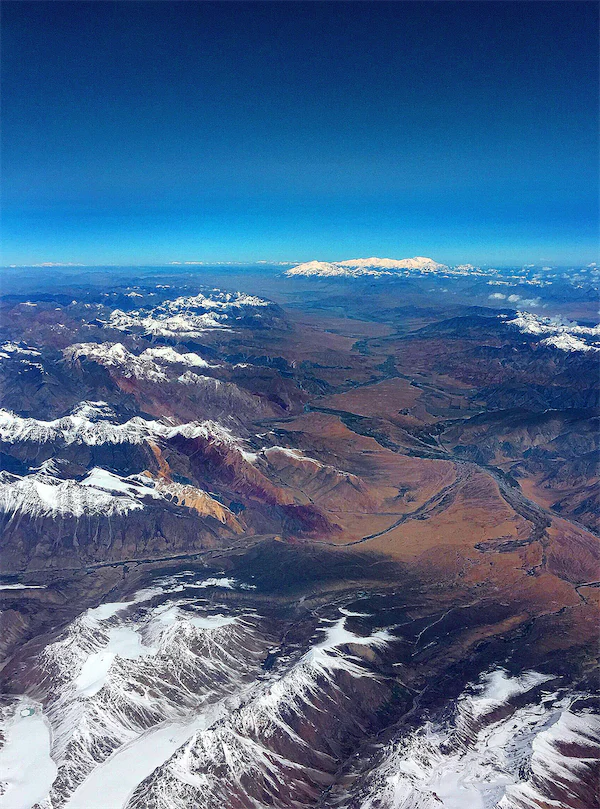 Reggae and the cannabis cliché
Jamaica · Rastafari · ganja · Marley · heritage · branding
A cultural trace of cannabis through reggae: a real historical connection between ganja, Rastafari and Jamaican music, later flattened into one of the most overused cannabis clichés.
Join early.
Keep the archive open.
The VADEMECUM is becoming a living archive of guides, tools, notes and practical plant knowledge.
Free member access. Join early. Keep the archive open.
Join early.
Keep the
archive open.
The VADEMECUM is not just a book anymore. It is becoming a living archive of guides, tools, notes and practical plant knowledge.
Free member access. Join early. Keep the archive open.
The VADEMECUM is becoming a living archive of practical plant knowledge.
Free member access.