
HEBRARIUM

Cannabis culture talks easily about value.
But value is not the same as money.
Money enters through structure: supply, demand, law, tax, risk, labour, infrastructure, quality, timing, distribution, compliance, reputation and trust. A grower who understands the plant but not the market can still lose everything. An investor who understands the market but not the plant can lose even faster.
The cannabis economy has already taught this lesson many times.
The gold rush is a useful metaphor, but only if we keep it sober.
In a rush, many people run toward the visible prize. Fewer ask who sells the tools, builds the roads, measures the risk, stores the goods, repairs the systems, trains the workers, writes the compliance manuals or keeps the water moving.
That is often where more durable value lives.
The lesson is not “do not grow”.
The lesson is:
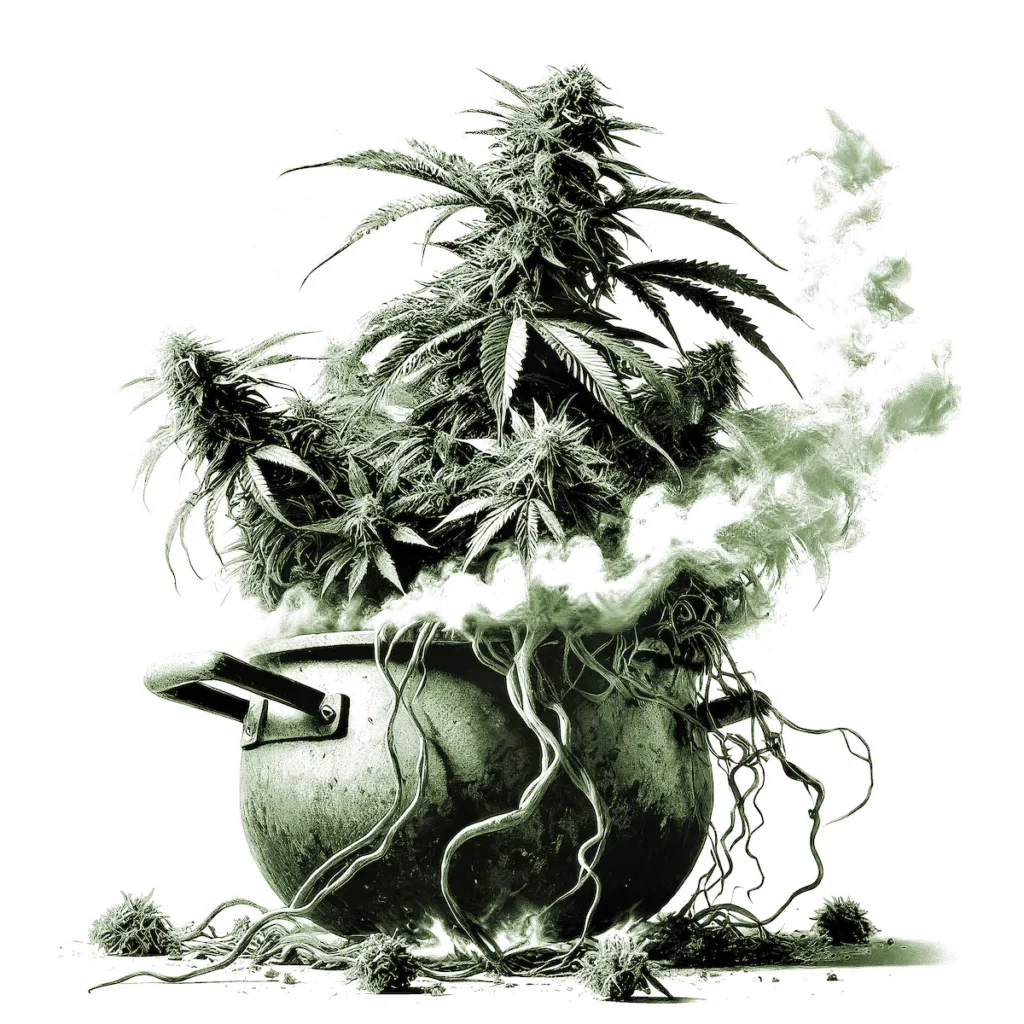
Do not confuse the plant
with the whole economy around the plant.
“Sell shovels during a gold rush” is one of the oldest business metaphors.
It survives because it contains a real warning: when everyone chases the same prize, the prize becomes crowded. The people who provide the necessary tools, infrastructure and services may face less romantic but more stable demand.
In cannabis, the shovel is rarely a shovel.
It may be:
This is not less serious than cultivation.
It may be more serious.
Because the industry does not only need more product. It needs better systems.
The shovel is the tool that makes the crop less stupid.
The phrase “Green Rush” made cannabis sound like a one-way road to money.
It was not.
In Canada and several mature US markets, legal cannabis faced oversupply, price compression, high regulatory cost, illicit-market competition and investor disappointment. Reports in 2026 continued to describe price compression and oversupply pressure across cannabis markets, with Canadian wholesale flower prices reportedly falling nearly 50% from January 2021 to December 2025.
Canada’s inventory problem showed the arithmetic clearly. In December 2023, 21.3 million packaged cannabis units were sold while 75 million packaged units were in inventory, leaving 53.7 million unsold units.
That is not a moral failure.
It is supply and demand.
When too many producers build capacity faster than legal demand grows, flower becomes a commodity. Margins fall. Storage fills. Debt becomes heavy. Brands discount. Investors leave. Operators cut staff. The plant may still be good; the market structure may still be brutal.
Legalisation does not suspend supply and demand.
This is one of the most important
economic lessons cannabis can teach.
When flower becomes abundant, growers often say the solution is “quality”.
Sometimes it is.
But quality is not a slogan.
A premium product must be verifiable. It must be consistent, clean, properly dried, properly cured, tested, traceable, legally compliant and trusted by buyers. “Organic”, “craft”, “medical”, “clean”, “regenerative” or “low carbon” are not magic words. They are claims that need systems behind them.
A niche is not a label.
It is a discipline the market can verify.
Premium without proof becomes marketing.
And cannabis has enough marketing.
Vertical integration sounds elegant.
More control. Fewer middlemen. Better margins. Stronger identity. Better quality assurance.
Sometimes, yes. But vertical integration is not freedom from complexity.
It is ownership of complexity.
Cannabis supply-chain guidance describes vertical integration as a route to supply security, quality control and brand consistency, while also noting the need for multiple licences, significant capital investment and added regulatory complexity.
That is the hidden sentence:
Vertical integration is control.
Control is expensive.
The middleman does not disappear.
The grower becomes the middleman.
That can be powerful. It can also be fatal if the operation lacks capital, skill or patience.
The better question is not:
Should I vertically integrate?
The better question is:
Which part of the chain can I control better
than the people who already do it?
There is a quieter way to think about money.
Knowledge.
Cannabis needs people who can solve specific problems:
These are not glamorous.
They are valuable because they reduce loss.
A grower who prevents one failed crop may create more value than a marketer who invents ten strain names.
The future cannabis economy will not reward only those who can grow. It will reward those who can make cultivation less wasteful, less risky, more measurable and more trustworthy.
The knowledge, not the marketing.
There is real value here. But the durable value is usually disciplined: education, infrastructure, measurement, compliance, quality, resource efficiency, honest branding and trust.
Learn the plant.
Then learn the system around the plant.
And learn this early:
The market does not pay for your enthusiasm.
It pays for solved problems.
That is where the honest money is.
| Claim | Legal cannabis is easy money. |
| False. | False. |
| Better lesson | Legalisation creates opportunity, but also competition, tax, regulation, oversupply and price pressure. |
| Claim | Growing the plant is where all the money is. |
| Verdict | Too simple. |
| Better lesson | Value may sit in tools, systems, compliance, testing, education, post-harvest, water, energy and risk reduction. |
| Claim | Premium quality always wins. |
| Verdict | Incomplete. |
| Better lesson | Premium quality must be consistent, proven and trusted. Words are not enough. |
| Claim | Vertical integration removes the middleman. |
| Verdict | Misleading. |
| Better lesson | Vertical integration often means becoming the middleman, the processor, the brand, the retailer and the compliance department. |
| Claim | More production means more profit. |
| Verdict | Often false. |
| Better lesson | In oversupplied markets, more production can destroy price and increase losses. |
Factual Note
Cannabis markets in Canada, the US and newer legal jurisdictions have faced price compression and oversupply when production capacity grew faster than legal demand. Recent reporting cites Canadian wholesale flower prices falling nearly 50% from January 2021 to December 2025 and many cannabis-related insolvencies between 2022 and early 2024.
Canada’s unsold inventory in December 2023 illustrates the oversupply problem: 21.3 million packaged units sold versus 75 million packaged units in inventory, leaving 53.7 million unsold units.
Vertical integration can provide control over supply, quality and brand consistency, but it also requires capital, licensing and regulatory capacity. It is a strategy, not a guarantee.
Join early.
Keep the archive open.
The VADEMECUM is becoming a living archive of guides, tools, notes and practical plant knowledge.
Free member access. Join early. Keep the archive open.
Join early.
Keep the
archive open.
The VADEMECUM is not just a book anymore. It is becoming a living archive of guides, tools, notes and practical plant knowledge.
Free member access. Join early. Keep the archive open.
The VADEMECUM is becoming a living archive of practical plant knowledge.
Free member access.