
HEBRARIUM

Cannabis and sex attract bad language.
Most of that language is too easy.
Sex is not one function. It is body, mind, hormones, blood flow, pain, memory, anxiety, trust, culture, relationship, consent and context. Cannabis does not enter a clean laboratory. It enters all of that.
That is why the question must be handled carefully.
Cannabis may change the room.
It does not replace the relationship.
The connection is not imaginary.
The endocannabinoid system is involved in many processes relevant to sexuality and reproduction, including pain, mood, reward, hormone signalling, fertility-related processes and sexual behaviour. Reviews describe endocannabinoid involvement in male sexual behaviour and in urologic and reproductive systems.
But that does not mean cannabis
is automatically “good for sex”.
The body’s own endocannabinoid system is subtle. Plant cannabinoids are external interventions. They may interact with the system, but they do not simply copy it cleanly.
This is the first correction:
The ECS gives cannabis a biological doorway.
It does not give cannabis a free pass.
A doorway is not a guarantee.
A common claim says that anandamide,
the so-called “bliss molecule”, surges during orgasm.
The real finding is more precise. In a study of circulating endocannabinoids and sexual arousal/orgasm in women, researchers found a significant increase in 2-arachidonoylglycerol, 2-AG, after masturbation to orgasm, while anandamide did not show the same significant post-orgasm rise.
That matters.
The story is still endocannabinoid.
It is just not the simple anandamide myth.
This is classic Myth Bench territory: a beautiful claim attached to a real system, but with the wrong molecule doing too much work.
Better lesson:
Orgasm appears to involve endocannabinoid signalling, but the clean “anandamide equals sexual bliss” slogan is too simple.
Many people report that cannabis can increase sexual desire, body awareness, touch sensitivity, relaxation or emotional closeness. Some studies, especially survey-based work, report associations between cannabis use and improved subjective sexual function in women. A 2020 review found dose-dependent effects in female sexual function research, with low doses generally facilitating or having no effect, while higher doses tended to inhibit.
That is the key.
Dose is not a detail. It can reverse the story.
The same plant can soften one body and silence another.
That is not contradiction.
That is pharmacology plus human difference.
There is a real reason people discuss
cannabis in sexual health: pain.
Dyspareunia, vulvodynia, endometriosis-related pain, pelvic floor tension and chronic pelvic pain can make intimacy difficult or impossible. Here the question is not “aphrodisiac”. It is relief, comfort and function.
Some emerging studies are worth watching. A recent randomised double-blind trial of topical CBD 5% plus myrcene for vestibulodynia reported improvements in pain, dyspareunia and tenderness compared with placebo.
That is promising.
It is not permission to market
every CBD lubricant as medicine.
The American College of Obstetricians and Gynecologists has noted that available studies of cannabis products for gynaecologic pain include reports of improvement in dysmenorrhea and dyspareunia, but the evidence base remains developing and requires clinical caution.
So the better line is:
Cannabis may belong in the pelvic-pain conversation.
It does not belong in miracle language.
For men, the story is mixed.
Some users report less performance anxiety, more pleasure or stronger sensory focus. But frequent or heavy cannabis use has also been associated in some studies with difficulties in orgasm, erectile function questions, hormone concerns or reduced sexual performance. A 2024 review describes the relationship between cannabis and sexuality as nuanced, with variables such as dose, frequency, duration of use and individual response all mattering.
This is why the “performance enhancer” myth is risky.
If anxiety is the problem, relaxation may help.
If coordination, arousal, erection, attention or orgasm are the problem, intoxication may harm.
Cannabis cannot be reduced to “good” or “bad” for sex.
It is conditional.
The body does not read marketing copy.
It reads dose, timing, context and biology.
Cannabis has a long history in South Asian religious, medicinal and cultural contexts, including bhang in India. Scholarly work discusses cannabis derivatives such as bhang as culturally and religiously significant in Indian traditions.
There are also writings about cannabis in entheogenic and tantric contexts, including Buddhist Tantra, where cannabis has been discussed as part of meditative or peak-experience practices.
But this is where modern cannabis culture often becomes lazy.
It takes complex traditions
and turns them into erotic decoration.
The safer, better line:
Cannabis has appeared in some religious and tantric contexts, but tradition is not a permission slip for modern sexual marketing.
Respect the tradition or leave it alone.
Any honest article about cannabis and sex needs one rule before all others:
Altered states complicate consent.
That does not mean cannabis and intimacy cannot coexist. It means nobody should use cannabis to manufacture compliance, lower resistance, bypass conversation or create ambiguity.
A loosened inhibition is not automatically truth.
Sometimes it is vulnerability.
Consent is not enhanced by confusion.
The false aphrodisiac is the fantasy
that cannabis can solve the hard parts of sex.
Cannabis may help some people with some parts of that picture. It may also make some parts worse.
The mature position is not prudish.
It is honest.
But it cannot do the human work for us.
This is not medical advice.
People with sexual pain, erectile dysfunction, pelvic pain, endometriosis, vulvodynia, trauma-related sexual distress, fertility concerns, pregnancy possibility, psychiatric vulnerability, cardiovascular issues or medication interactions should not treat cannabis products as casual solutions.
Products vary widely in THC/CBD content, contaminants, route of use and onset time. Edibles and drinks are especially unpredictable for intimacy because onset is delayed and overconsumption is easy.
Topicals and lubricants also require caution: ingredients, allergies, mucosal irritation, latex condom compatibility, infections and product testing matter. “Natural” is not automatically safe on genital tissue.
The most intimate tissue deserves
the least sloppy chemistry.
| Claim | Cannabis is an aphrodisiac. |
| Too simple. | False. |
| Better lesson | Cannabis may improve or impair sexual experience depending on person, dose, context, frequency, route and expectation. |
| Claim | Anandamide surges during orgasm. |
| Verdict | Needs correction. |
| Better lesson | A study found post-orgasm increase in 2-AG, not the simple anandamide slogan. |
| Claim | CBD lubricants are proven medical solutions for painful sex. |
| Verdict | Overclaim. |
| Better lesson | Emerging evidence exists for some CBD-based topical approaches in specific pain conditions, but products and claims vary widely. |
| Claim | Tantra proves cannabis is sacred sexual medicine. |
| Verdict | Romantic overreach.. |
| Better lesson | Cannabis has appeared in some religious/tantric contexts, but broad sexual claims need specific sources. |
| Claim | More cannabis means better sex. |
| Verdict | False. |
| Better lesson | Cannabinoid effects can be biphasic; higher dose can reverse or worsen the desired effect. |
| Claim | Cannabis makes consent easier. |
| Verdict | Dangerous. |
| Better lesson | Intoxication complicates consent; clarity, prior agreement and the ability to stop matter. |
Factual Note
At the Jirzankal Cemetery in the eastern Pamirs, dated around 500 BCE, researchers found cannabinoid residues in wooden braziers and on burned stones.
The evidence indicates that cannabis plants were burned during mortuary ceremonies, making this one of the earliest directly dated and scientifically verified examples of ritual cannabis smoking.
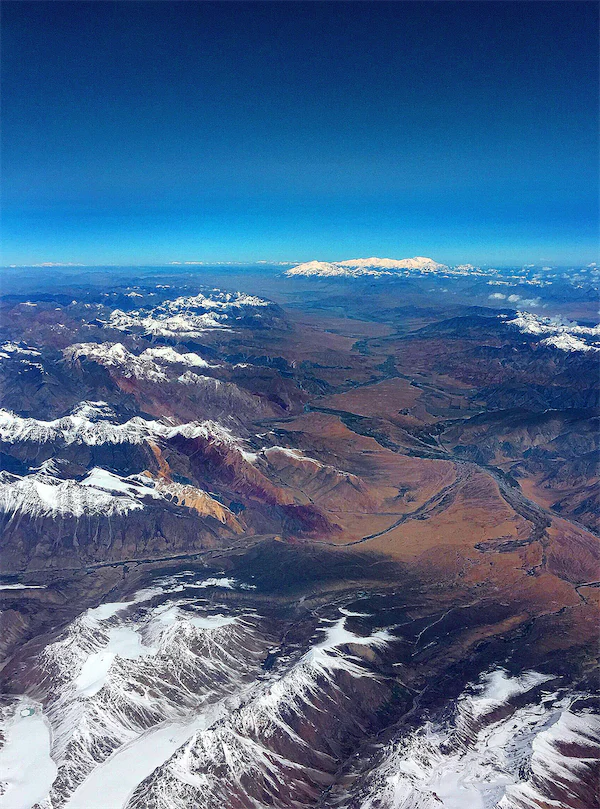 Jirzankal Cemetery
Eastern Pamirs, western China
c. 500 BCE
A high-altitude burial site where wooden braziers and heated stones preserved chemical evidence of burned cannabis.
The context suggests ritual or religious use during funerary ceremonies.
Join early.
Keep the archive open.
The VADEMECUM is becoming a living archive of guides, tools, notes and practical plant knowledge.
Free member access. Join early. Keep the archive open.
Join early.
Keep the
archive open.
The VADEMECUM is not just a book anymore. It is becoming a living archive of guides, tools, notes and practical plant knowledge.
Free member access. Join early. Keep the archive open.
The VADEMECUM is becoming a living archive of practical plant knowledge.
Free member access.