
HEBRARIUM

An object without context becomes aesthetic.
An object with context becomes evidence.
Sometimes the plant survives as a word.
Sometimes as a law.
Sometimes as a song.
Sometimes as smoke.
But sometimes it survives more quietly: as an object.
Material culture matters because it refuses abstraction. It brings cannabis back into the hand. Not cannabis as opinion. Not cannabis as lifestyle. Not cannabis as fear. Cannabis as thing.
The history of the plant is often told through arguments: medicine or danger, fibre or drug, freedom or control, heritage or stigma. Objects cut through some of that noise. A rope does not need to make a speech. A bottle does not need to win a debate.
A textile sample does not ask to be romanticised.
It simply proves that the plant was there.
The hemp rope in a museum collection tells us something that slogans cannot. It tells us that cannabis fibre once belonged to the practical machinery of the world: ships, workshops, farms, warehouses, mills, harnesses, nets and industrial movement. The National Museums Scotland catalogue, for example, preserves a specimen of Russian hemp driving rope used for machinery — a small object that carries a large history of fibre, trade, industry and mechanical power.
That is a cannabis trace.
Not a leaf. A rope.
The medicine bottle tells another story. Patent medicines and pharmaceutical preparations remind us that cannabis once stood inside mainstream medical and commercial systems before later prohibition narrowed public memory. A National Army Museum object for Chlorodyne notes ingredients including laudanum, cannabis and chloroform — an uncomfortable but useful reminder that medical history is not always clean, safe or modern, but it is still history.
That is also a cannabis trace.
Not a joint. A bottle.
Then there are the tools: brakes, hackles, scutching knives, spinning wheels, looms, ropewalk equipment. These objects speak of labour. They show that hemp did not become cloth or cordage through botanical virtue alone. The stalk had to be worked. The fibre had to be separated, cleaned, twisted and woven.
The plant did not become material by itself.
Someone had to make it useful.
This is where LIBERA HERBA should pay attention. Cannabis culture often overuses the image of the leaf. The leaf is recognisable, but it can become lazy. The object is more demanding. It asks what the plant did in the world.
Museum collections help because they gather the plant’s material afterlife. The Hash Marihuana & Hemp Museum presents hemp artefacts, historical images, tools and documents that witness the plant’s agricultural and industrial history. Europeana’s hemp fibre collections point towards another route: digital cultural heritage, rights statements and objects that can be searched, credited and placed in context.
But the object must not become decoration.
The question is always:
An object without context becomes aesthetic.
An object with context becomes evidence.
That distinction is central to LIBERA HERBA.
Because cannabis has been heavily visualised and poorly understood. Leaves, smoke, skulls, saints, rebels, green crosses, 420 logos, reggae colours, luxury packaging, medical symbols, police warnings — the image-world of the plant is crowded. But material culture slows the eye down. It makes us look at the plant through what people actually made from it, did with it, stored it in, sold it through or used to control it.
The best object traces will not always be beautiful.
For LIBERA HERBA, objects are not ornaments.
They are witnesses.
They help rebuild a plant history that prohibition, marketing and folklore have all tried to flatten.
The plant was not only grown.
It was handled.
And sometimes the hand leaves better evidence than the headline.
A rope may carry more history
than a thousand leaves.
Hemp rope is one of the clearest object traces of cannabis as infrastructure.
It belongs to ships, farms, workshops, ports, warehouses and machines.
In rope, the plant is not an argument.
It is load, pull, friction and strength.
A bottle can preserve
both medicine and misunderstanding.
Old pharmaceutical objects show cannabis inside medicine’s material world: bottles, labels, chests, tinctures, patent preparations and commercial claims.
They should be read carefully, not romantically.
Medical history is evidence,
not automatic proof of safety or modern efficacy.
The plant did not become material
by itself.
Hemp tools matter because they show the work hidden between plant and product.
Brakes, hackles, looms, spinning tools and ropewalk equipment turn cannabis history into labour history.
The fibre did not free itself.
Sometimes the object is not the plant.
It is the file around the plant.
Some of the most important cannabis objects are paper objects.
Tax stamps, licences, seed catalogues, medicine labels, prohibition posters, court forms, grow manuals and zines show how the plant moved through commerce, law, fear, education and underground culture.
Paper can liberate knowledge.
Paper can also control it.
The leaf is a symbol.
The object is evidence.
Cannabis visual culture often depends too heavily on the leaf.
The leaf is useful, but it can flatten the story.
Objects restore complexity. They show the plant as fibre, medicine, law, labour, trade, design, stigma and memory.
Factual Note
Cannabis material culture includes objects made from, used with, regulating or representing the plant: hemp rope, textiles, tools, seed catalogues, medicine bottles, tax stamps, legal forms, posters, pipes, records, labels and manuals.
Museum and archive collections are especially useful because they help place objects in context. Object records should be used with rights awareness: link, credit and reuse only when the rights status allows it.
 Objects / Material culture
Rope · textiles · tools · medicine · labels · law · print · archive
A cultural trace of cannabis through things: objects that prove the plant was not only imagined, smoked, banned or debated, but handled, worked, sold, regulated, preserved and used.
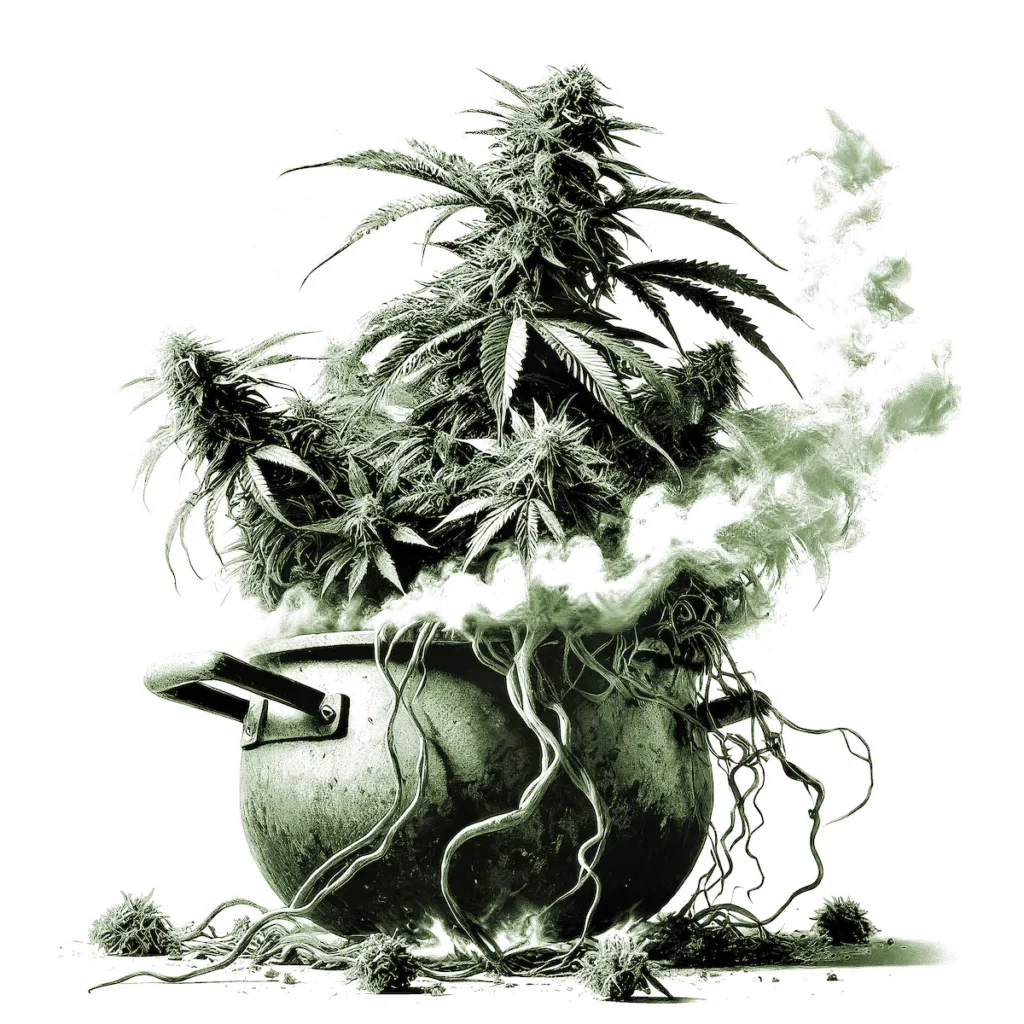
Join early.
Keep the archive open.
The VADEMECUM is becoming a living archive of guides, tools, notes and practical plant knowledge.
Free member access. Join early. Keep the archive open.
Join early.
Keep the
archive open.
The VADEMECUM is not just a book anymore. It is becoming a living archive of guides, tools, notes and practical plant knowledge.
Free member access. Join early. Keep the archive open.
The VADEMECUM is becoming a living archive of practical plant knowledge.
Free member access.