
HEBRARIUM

Elias Petropoulos belongs
in cannabis education.
For one reason above all:
he studied what respectable society preferred to insult.
For cannabis, this matters deeply.
Because in Greece, cannabis history is not only botany, law or medicine. It is also rebetiko, police files, prison memory, slang, class contempt, migration, poverty, music and the long shadow of moral hypocrisy.
Petropoulos is not a cultivation source.
He is a cultural witness.
The plant was not buried.
It was burned into the ritual.
His major work Rebetika Songs (Ρεμπέτικα Τραγούδια) is central. Modern book records describe the volume as a large collection of more than 1,400 classified songs with studies and texts, and it remains one of the landmark works on rebetiko.
This is where cannabis enters most clearly: not as a plant in a field, but as hashish culture inside the rebetiko world.
The tekes was not merely a “drug den” in the moralistic police sense. It was a social space of the urban underground: music, poverty, exile, masculinity, ritual, escape, fellowship, illegality, coded language and marginal dignity. Rebetiko itself is widely understood as emerging from harsh urban and marginal conditions, with themes including crime, drugs, poverty, prison, prostitution, violence, exile, love and everyday sorrow; even mainstream summaries note that hashish pleasure is a recurrent, sometimes over-emphasised, theme in the genre.
So the educational value is not:
“Cannabis made rebetiko.”
That would be too simple.
The better lesson is:
Rebetiko shows how prohibition, poverty and stigma
turn a plant into a whole social vocabulary.
Petropoulos is especially useful for language. He understood that the underground does not only hide in places. It hides in words.
Note: These words do not translate cleanly. Some describe objects, some places, some people, and some states of mind. Their meaning shifts by period, class, region and song. They are kept in Greek because the vocabulary itself is part of the evidence.
These words are not cute folklore. They are evidence.
When a community develops a vocabulary around forbidden practice, that vocabulary becomes a map of fear, pleasure, class, policing, humour and identity.
This connects perfectly with our Names of the Plant chapter. Globally we have cannabis, hemp, ganja, marijuana, weed, reefer. In Greece we have our own underground lexicon, shaped by ports, prisons, police, refugees, musicians and the tekés.
Language is where prohibition leaves fingerprints.
The Handbook of the Good Thief (Το Εγχειρίδιον του Καλού Κλέφτη) also belongs nearby, but carefully.
It is not a cannabis book. It is a book about the criminal/underground world, thieves, prison culture and social codes. Contemporary book listings confirm the title and its later editions, and reviews describe the book as moving into the “savoir-vivre” of prisons, including references to Averof and Heptapyrgio prison worlds.
If cannabis appears there, it should be treated as part of prison/underground culture, not as a clean historical proof of any specific practice unless checked in the text.
The value is methodological:
Petropoulos forced educated Greece to look at people it preferred to reduce to categories: thief, prisoner, whore, deviant, hashish smoker, underworld type.
That does not mean he was always gentle or always fair.
But he refused the official lie that the marginalised have no culture.
Petropoulos is useful because
he treats the margins as archives.
There is also an explicit Petropoulos cannabis trail beyond the titles you mentioned. A documentary page for Elias Petropoulos: An Underground World lists works including The Rebetika Songs, The Holy Hashish, The Brothel, Kaliarda, and The Handbook of the Good Thief, placing hashish directly among the recurring subjects of his underground ethnography.
This is important because it confirms that hashish was not accidental in his work. It belonged to his wider project: recording what respectable culture erased.
I would still want the actual text of The Holy Hashish (Το Άγιο Χασισάκι) or related publication before quoting claims.
But the category is real.
A plant burned at the border between body and spirit.
Read him for:
Do not read him as:
Read Petropoulos generously. Believe him slowly. Verify what matters.
That line fits him perfectly.
| Claim | Petropoulos proves cannabis was the essence of rebetiko. |
| Verdict | Too simple. |
| Better lesson | Hashish culture was an important part of some rebetiko worlds, but rebetiko cannot be reduced to cannabis. |
| Claim | The tekés was just a drug den. |
| Verdict | Police-language reduction. |
| Better lesson | The tekés was also a social and musical space of the urban underground. |
| Claim | Petropoulos is now “official”, so everything he wrote is settled fact. |
| Verdict | False. |
| Better lesson | Institutional recognition does not make an author infallible. It makes him worth studying seriously. |
| Claim | His underground material is unsuitable for education. |
| Verdict | False. |
| Better lesson | It is unsuitable for shallow education. It is excellent for critical education. |
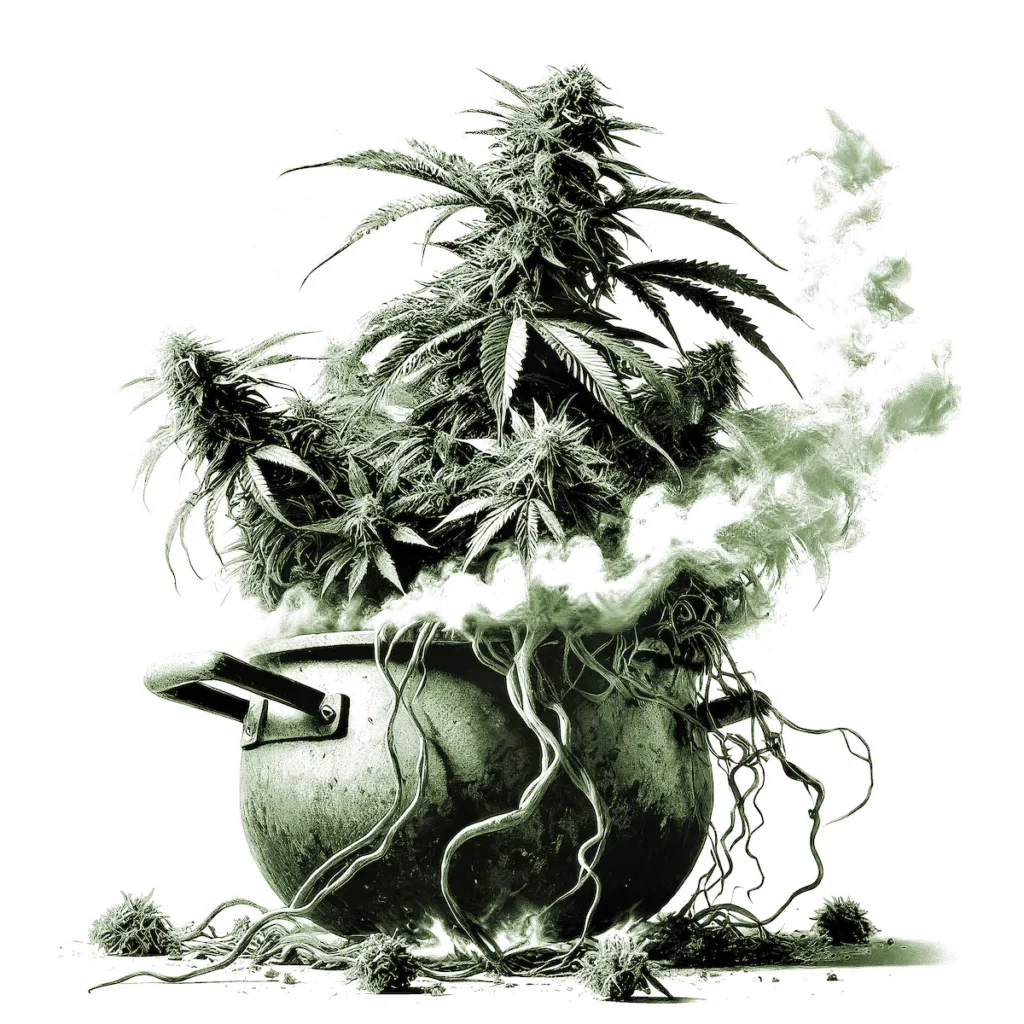
Join early.
Keep the archive open.
The VADEMECUM is becoming a living archive of guides, tools, notes and practical plant knowledge.
Free member access. Join early. Keep the archive open.
Join early.
Keep the
archive open.
The VADEMECUM is not just a book anymore. It is becoming a living archive of guides, tools, notes and practical plant knowledge.
Free member access. Join early. Keep the archive open.
The VADEMECUM is becoming a living archive of practical plant knowledge.
Free member access.