
HEBRARIUM

Before photography, a plant had to be drawn into knowledge.
A good botanical image was not decoration.
It was evidence.
It helped the reader recognise a plant, compare its parts, remember its form and place it inside medicine, agriculture or household use. For cannabis, this matters deeply. Long before the modern leaf became a symbol of identity, protest, prohibition or branding, hemp and cannabis appeared in herbals as plants to be named, described and understood.
The image made the plant legible.
Four books show this especially well.
De Historia Stirpium Commentarii Insignes · 1542
The plant became knowledge
when someone drew it well enough to recognise.
Leonhart Fuchs’ De Historia Stirpium is one of the great Renaissance herbals. Published in Basel in 1542, it described hundreds of plants and included more than 500 woodcut illustrations. Its importance is not only textual. It is visual. The plant had to be drawn clearly enough to become usable knowledge.
The cannabis image in Fuchs belongs to that discipline of recognition. It is not a decorative plant. It is a botanical subject, presented with enough clarity for readers to identify its form.
But Fuchs’ deeper lesson may be the way he treated the artists.
Unusually for the period, the people who made the images were acknowledged. The plants were drawn from nature by Albrecht Meyer, transferred to woodblocks by Heinrich Füllmaurer, and cut by Veit Rudolf Speckle. Their group portrait was included at the end of the book — a rare act of recognition in a time when scientific illustrators often disappeared behind the author’s name (more).
For LIBERA HERBA, this matters.
Cannabis knowledge did not travel by words alone.
It travelled through the trained eye and the disciplined hand.
The Herball or Generall Historie of Plantes · 1597
In Gerard, hemp is not scandal.
It is practical knowledge.
John Gerard brings cannabis into one of the most important English-language herbal traditions. His Herball, first published in 1597, was a large illustrated work giving practical information on more than 1,000 plants, with around 2,150 woodcuts. Each entry typically supplied names, description, place and season of growth, and “tempers” and “vertues” — the language of use and medicinal character in its time.
The hemp chapter is valuable because it shows the plant as practical infrastructure. Gerard discusses male and female hemp in the older botanical language of the period, and connects the plant to seed, fibre and use. His text states, for example, that “the male is called Carl Hemp, and Winter Hemp” and “the female, Barren Hemp, and Summer Hemp”.
We should not read this as modern botany.
We should read it as historical plant knowledge.
Gerard’s hemp is not counterculture, not criminality, not branding. It is a useful plant inside an English herbal: named, separated, described and placed in a practical world of medicine, fibre and household economy.
This is why Gerard belongs here.
He shows cannabis
before modern stigma narrowed the frame.
A Curious Herbal · 1737–1739
Blackwell did not only draw plants.
She turned survival into botanical work.
Elizabeth Blackwell is essential.
Not only because she illustrated hemp, but because her work stands at the meeting point of botanical illustration, medical use, women’s labour and survival.
A Curious Herbal was issued between 1737 and 1739 and contained 500 engraved images of medicinal plants. It was the first significant herbal produced by a British woman and is recognised as a major achievement in medical botany and botanical illustration.
The story behind it is extraordinary but should be handled cleanly. Blackwell undertook the work partly as a desperate effort to raise money to free her husband from debtors’ prison. Encouraged by figures including Sir Hans Sloane and Isaac Rand, she took lodgings near the Chelsea Physic Garden and began drawing plants from life. Her husband supplied nomenclature from prison.
Her hemp plates matter because they show cannabis inside the medical-plant world of the 18th century. We should be careful with plate numbers, because online references are inconsistent: reliable catalogue records identify The Female Hemp as Cannabis foemina, from A Curious Herbal.
For LIBERA HERBA, Blackwell is more than a botanical illustrator.
She is a reminder that knowledge has labour behind it:
drawing, engraving, colouring, naming, publishing, surviving.
Medical Botany · 1790–1793
The herbal becomes medical botany
when the image serves prescription,
not curiosity alone.
William Woodville moves the story into a more explicitly medical-botanical frame.
His Medical Botany was published in London between 1790 and 1793. The Biodiversity Heritage Library records the work as containing systematic and general descriptions of medicinal plants, with plates by James Sowerby.
This is important because the visual register changes.
The plant is no longer only in the broad world of the herbal. It is placed inside a more systematic medical reference. Another library description notes that Woodville intended to educate medical practitioners about the plants they prescribed, and that the work contained hand-coloured engravings by Sowerby.
Woodville and Sowerby therefore belong near The Plant in Medicine Cabinets.
Cannabis appears not as folklore, but as a plant that could be catalogued, illustrated and discussed in relation to materia medica. We should not overstate the work as “the manual for all European pharmacists”, but it is safely described as an influential late 18th-century British work of medical botany.
Science needed the artist
before it had the photograph.
Fuchs’ cannabis belongs to the Renaissance project of making plants recognisable through disciplined illustration.
The special value is not only the plate, but the acknowledgement of the artists who made botanical knowledge visible.
Before cannabis became controversy,
hemp was a useful entry in a herbal.
Gerard’s hemp chapter shows the plant inside English herbal knowledge: male and female hemp, seed, fibre, use and practical description.
It is cannabis before modern stigma
takes over the language.
The archive remembers the plant.
It should also remember the hand.
Blackwell’s hemp plates belong to a wider achievement: 500 medicinal plants drawn, engraved and published by a woman under difficult personal circumstances.
Her work turns botanical illustration into survival, discipline and medical knowledge.
Factual Note
Leonhart Fuchs’ De Historia Stirpium was published in 1542 with hundreds of woodcut plant illustrations and unusual acknowledgement of the artists involved: Albrecht Meyer, Heinrich Füllmaurer and Veit Rudolf Speckle. John Gerard’s Herball was first published in 1597 and presented practical English-language plant knowledge, including a chapter on hemp.
Elizabeth Blackwell’s A Curious Herbal appeared between 1737 and 1739 with 500 engravings of medicinal plants and includes hemp plates such as The Female Hemp / Cannabis foemina. William Woodville’s Medical Botany was published between 1790 and 1793, with plates by James Sowerby, and represents a more systematic medical-botanical treatment of medicinal plants.
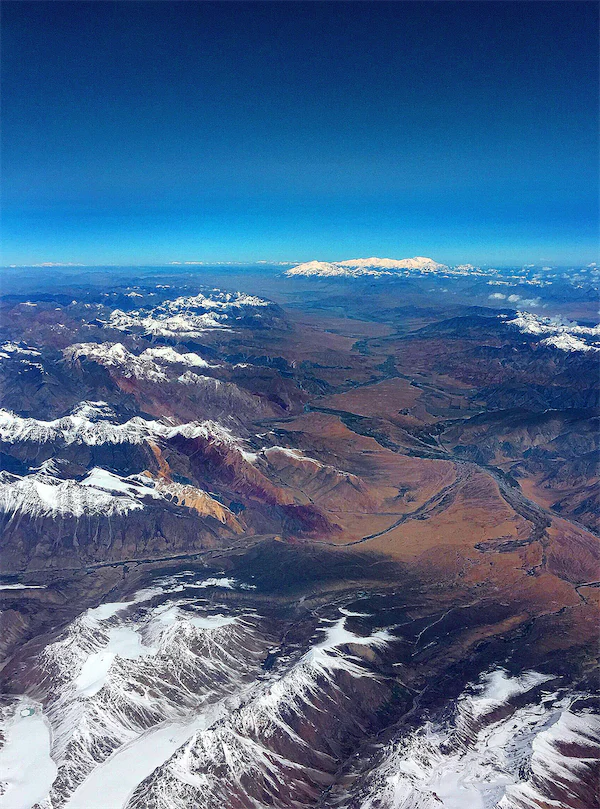 Cannabis in the herbals
Renaissance · England · medical botany · illustration · hemp · materia medica
A visual knowledge trace of cannabis: how herbals and medical-botanical books made the plant recognisable before photography, before modern cannabis law and before the leaf became a cultural symbol.
Join early.
Keep the archive open.
The VADEMECUM is becoming a living archive of guides, tools, notes and practical plant knowledge.
Free member access. Join early. Keep the archive open.
Join early.
Keep the
archive open.
The VADEMECUM is not just a book anymore. It is becoming a living archive of guides, tools, notes and practical plant knowledge.
Free member access. Join early. Keep the archive open.
The VADEMECUM is becoming a living archive of practical plant knowledge.
Free member access.