
HEBRARIUM

The law did not need to burn the fields.
It only had to make the paperwork impossible.
A plant does not always disappear by being burned. Sometimes it disappears by being registered.
Stamped. Taxed. Recorded.
Transferred only through the correct form, by the correct person, for the correct purpose, under the correct authority.
This is the quieter violence of paperwork.
The Marihuana Tax Act of 1937 did not simply announce that cannabis had no history, no medicine, no fibre, no field, no use. It did something more bureaucratic and, in many ways, more effective. It placed cannabis inside a system of taxes, registrations, transfer rules and penalties.
The law’s title said the quiet part clearly. It was an act to impose occupational excise taxes on certain dealers, transfer taxes on dealings in marihuana, and to safeguard revenue through registry and recording.
Registry. Recording. Tax. Transfer.
This is where the plant changed rooms.
Before 1937, cannabis already lived in several legal and cultural worlds. It appeared in medicines, agriculture, state laws, moral panic, local police concerns, international drug-control debates and racialised public fear. The 1937 Act did not create all of that from nothing.
But it federalised the trap.
The law made cannabis legible to the state as a taxable, traceable, suspicious substance. Once that happened, the old identities of the plant became harder to hold together.
The law pulled them into the same administrative net.
This is why LIBERA HERBA should not reduce the story to one villain or one conspiracy.
The popular version is familiar: hemp was destroyed by industrial interests, paper money, timber, nylon, Hearst, DuPont and Mellon. That story has power because it identifies real tensions: new synthetic materials, newspaper propaganda, industrial competition, racist fear, bureaucratic ambition and the political usefulness of panic.
But the clean conspiracy version is too neat.
History is messier.
The Marihuana Tax Act belonged to a wider world of early 20th-century drug regulation, moral reform, state-level cannabis laws, international narcotic control, media sensationalism, racial anxiety and enforcement politics. It followed many state controls rather than inventing cannabis prohibition alone. It also met opposition from the American Medical Association, which objected to the burden it placed on medical knowledge and cannabis preparations.
That is the serious reading.
Not innocence. Not hysteria.
Structure.
The law mattered because it changed the practical conditions of use. A doctor, farmer, importer, researcher, pharmacist or dealer no longer faced only the question:
“What is this plant for?”
They faced another question:
“Can you survive the paperwork?”
That question is never neutral.Paperwork can be a form of policy.
Paperwork can decide which forms of knowledge continue and which become too risky to touch. Paperwork can make a plant technically legal but practically unusable.
This is the deeper lesson of 1937.
The law did not need to erase hemp from history. It only had to make ordinary contact with the plant administratively dangerous.
Once cannabis became a paper problem, everything around it changed.
Medicine became risk.
Research became friction.
Cultivation became suspicion.
Trade became exposure.
Possession became evidence.
And the plant, once familiar enough to be named in pharmacies and fields, became increasingly defined through the state’s file.
This is not only American history.
It is a pattern.
Modern cannabis law still works through forms, licences, thresholds, permits, inspections, stamps, lab reports, certificates, seed registers, THC limits, import codes and compliance systems. Some of that regulation is necessary. Serious cultivation, medicine, food, fibre and commerce need standards.
But the line is delicate.
Regulation can protect.
Regulation can also suffocate.
The question is not whether cannabis should exist outside all law. That is childish.
The question is whether law helps knowledge, safety and responsible use — or whether it buries the plant under fear, stigma and administrative impossibility.
For LIBERA HERBA, the Marihuana Tax Act matters because it teaches a sober lesson.
Prohibition is not always a dramatic door slamming shut.
Sometimes it is a counter.
A stamp.
A register.
A missing form.
A fee.
A risk no serious professional can afford to take.
The plant did not become dangerous because it was suddenly understood. It became dangerous because it was renamed, reframed, recorded and punished.
And once the paperwork arrived, the archive changed.
Paperwork can make a plant
technically legal but practically unusable.
The Marihuana Tax Act of 1937 imposed taxes and registration duties around cannabis dealings.
On paper, it was revenue law.
In practice, it became a federal control mechanism.
That distinction matters.
The law did not simply say “cannabis is banned”.
It made legal contact with cannabis conditional, costly, visible and risky.
The clean conspiracy version is too neat.
The real structure is more revealing.
The easy story says hemp was killed by one industrial conspiracy.
LIBERA HERBA should not repeat that lazily. The stronger reading is broader: cannabis prohibition grew through overlapping forces — moral reform, state laws, racial fear, media panic, international drug control, enforcement politics, industrial change and bureaucratic power.
This does not make the law innocent.
It makes the history more useful.
When research becomes paperwork,
knowledge slows down.
The American Medical Association objected to the 1937 law because cannabis and its preparations were still part of medical practice and research history.
This matters.
It shows that the law did not only strike against recreational use or underground culture. It also made scientific and medical contact with the plant more difficult.
The damage was not only criminal. It was educational.
Once the name changes, the file changes.
Once the file changes, the field changes.
The 1937 law helped collapse several plant identities into one administrative category.
Law rarely preserves nuance when fear is useful.
This is why language and paperwork belong together.
Once the name changes, the file changes.
Once the file changes, the field changes.
Regulation can protect.
Regulation can also suffocate.
Today, cannabis is no longer hidden in the same way. But it is still governed through forms: licences, lab tests, THC thresholds, cultivation permits, seed rules, import codes, patient registries and compliance inspections.
Some of this protects people.
Some of it protects systems.
The question LIBERA HERBA asks is simple:
Does the paperwork serve knowledge, safety and responsibility — or does it become a new form of prohibition?
It made legal contact with cannabis conditional, costly, visible and risky.
Factual Note
The Marihuana Tax Act of 1937 imposed federal taxes and registration requirements on cannabis-related activity in the United States, including cultivation, sale, possession, import and export. It followed many earlier state cannabis laws rather than creating cannabis control from nothing.
The Act was opposed by the American Medical Association, which warned that it would burden medical use and research involving cannabis preparations. Popular accounts often frame the law as an industrial conspiracy against hemp; LIBERA HERBA treats that as an important but contested narrative, better understood within a wider structure of racialised fear, enforcement politics, moral reform, media panic, bureaucracy and industrial change.
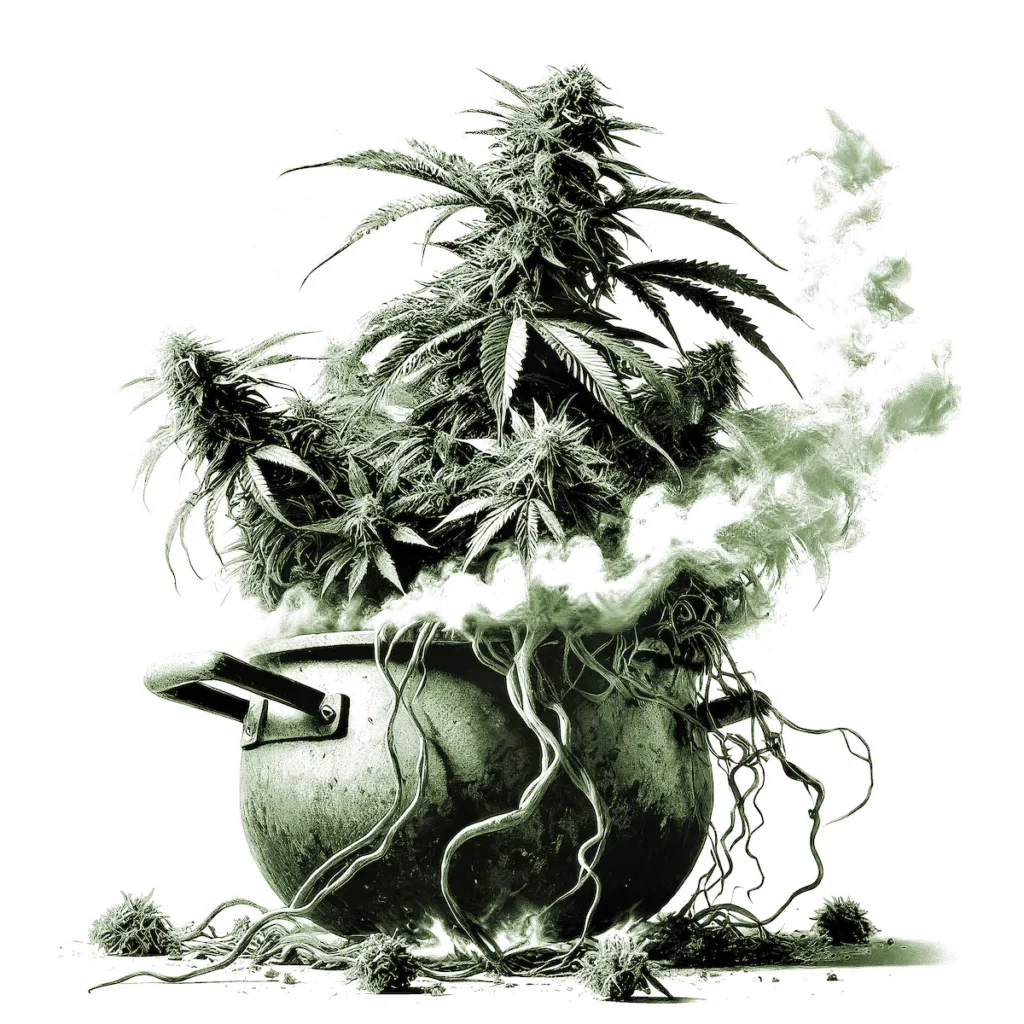
 When a plant became paperwork
United States · 1937
Tax · registry · prohibition · medicine · hemp · bureaucracy
A legal and cultural trace of cannabis as an administrative object. The Marihuana Tax Act did not simply attack the plant in the field; it placed cannabis inside a system of taxes, forms, registrations and penalties that made ordinary contact with the plant increasingly risky.
Join early.
Keep the archive open.
The VADEMECUM is becoming a living archive of guides, tools, notes and practical plant knowledge.
Free member access. Join early. Keep the archive open.
Join early.
Keep the
archive open.
The VADEMECUM is not just a book anymore. It is becoming a living archive of guides, tools, notes and practical plant knowledge.
Free member access. Join early. Keep the archive open.
The VADEMECUM is becoming a living archive of practical plant knowledge.
Free member access.