
HEBRARIUM
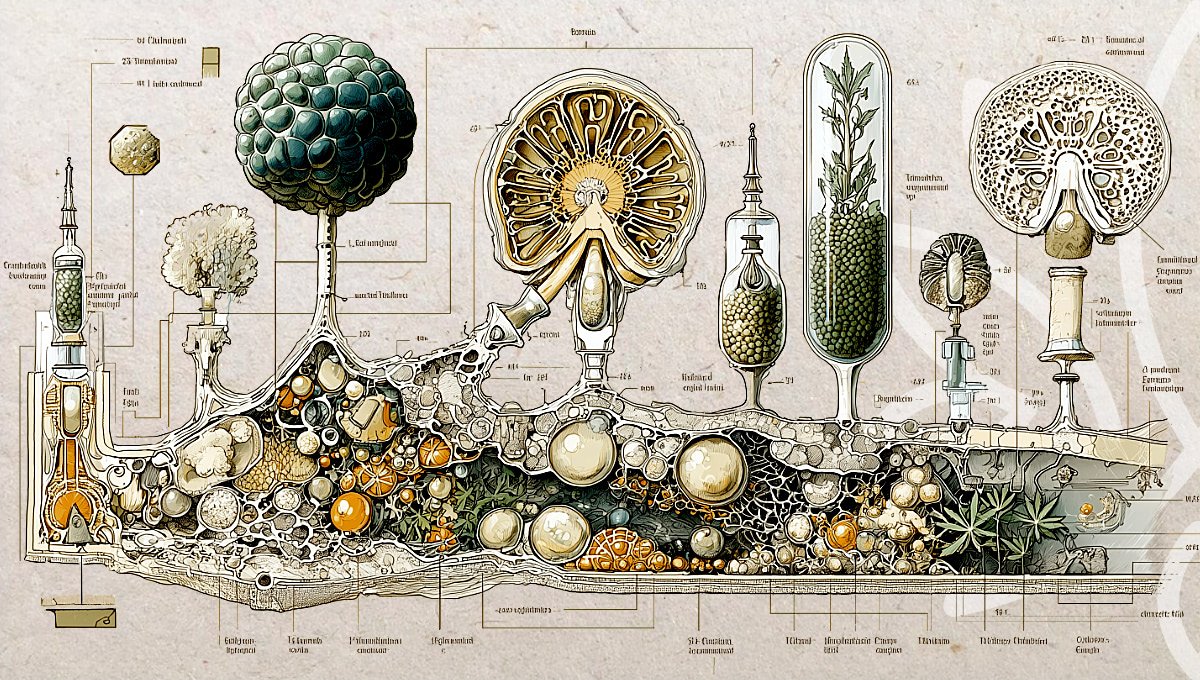
The plant did not create the lock.
The lock was already there.
In the late 20th century, cannabis research helped reveal one of the body’s own signalling networks: the endocannabinoid system. CB1 receptors, found mainly in the central nervous system, CB2 receptors, involved in immune and inflammatory regulation, and endogenous molecules such as anandamide and 2-AG showed that the body was not “foreign” to cannabinoid-like signalling.
This is where cannabis becomes scientifically strange and culturally powerful.
The plant did not invent the system.
But it carried molecules able to touch it.
For LIBERA HERBA, this is one of the deepest traces of the plant: not a miracle claim, not mysticism, but a biological encounter between a plant and a signalling language already present in the human body.
The key was not made for cannabis.
But cannabis helped us notice the key.
Source
Marc-Antoine Crocq, “History of cannabis and the endocannabinoid system,” Dialogues in Clinical Neuroscience, 2020. Available via NCBI / PubMed Central.

Join early.
Keep the archive open.
The VADEMECUM is becoming a living archive of guides, tools, notes and practical plant knowledge.
Free member access. Join early. Keep the archive open.

Join early.
Keep the
archive open.
The VADEMECUM is not just a book anymore. It is becoming a living archive of guides, tools, notes and practical plant knowledge.
Free member access. Join early. Keep the archive open.
The VADEMECUM is becoming a living archive of practical plant knowledge.
Free member access.