
HEBRARIUM

Cannabis does not need more noise.
It has enough.
It has been praised, feared, banned, sold, smoked, prescribed, mocked, worshipped, marketed, medicalised, criminalised and misunderstood.
What it still needs is education.
Education.
The classroom is not only a room with desks. For LIBERA HERBA, the classroom is any place where the plant is made clearer: a grower’s notebook, a lab report, a museum label, a medical paper, a historical archive, a pH reading, a law, a bottle, a song, a seed catalogue, a conversation that refuses to become stupid.
Cannabis education begins with one discipline:
do not make the plant smaller than it is.
It is a plant with many histories — and each history needs its own method.
This is why education must come before opinion.
An opinion can be loud without being useful.
Education asks better questions.
These questions do not kill cannabis culture.
They make it adult.
For decades, prohibition made education difficult. It pushed knowledge into courtrooms, police files, underground manuals, rumours, activist networks, patient circles, private gardens and scattered archives. Some of that hidden knowledge was valuable. Some of it was brave. Some of it was wrong. Some of it became myth because there was no public place to correct it.
That is what happens when a subject is forced out of school.
The record does not disappear.
It mutates.
Then legalisation and medical reform bring a new problem. Suddenly the plant returns, but not always with better understanding. It returns through branding, investment, wellness claims, strain names, influencer language, overconfident medical promises, under-explained risks and compliance paperwork that many people do not understand.
Prohibition created ignorance by force.
The market can create ignorance by speed.
Education has to stand between both.
The goal is not to make cannabis look good.
That would be marketing.
The goal is to make cannabis readable.
This is why evidence matters. The National Academies report on cannabis and cannabinoids uses graded levels of evidence — substantial, moderate, limited or insufficient — to describe what is known and how strongly it is known. That structure is important because serious education does not treat all claims equally. It distinguishes proof from possibility, signal from noise, and early evidence from settled knowledge.
That is the tone LIBERA HERBA needs.
Not “cannabis cures”. Not “cannabis destroys”.
But:
The same applies to public health. Cannabis can have benefits in specific contexts and risks in others. The CDC describes effects on brain function, including memory, learning, attention, decision making, coordination, emotions and reaction time. NIDA continues to fund research into health effects, including effects on the developing brain and mental health.
A serious cannabis education cannot hide that.
It also cannot use risk as a weapon to erase the rest of the plant.
The educational challenge is to keep both truths visible: cannabis has real uses, real histories, real cultural weight and real risks.
This is especially important for growers.
Cultivation education is often where myth meets consequence. A bad feeding claim can burn a crop. A bad pH habit can lock nutrients out. A bad humidity environment can invite mould. A bad lighting assumption can waste power. A bad pesticide decision can become a health risk.
The plant teaches, but not gently.
This is why the grower’s classroom begins with observation and measurement.
A grower who records learns faster than a grower who guesses.
A grower who measures can see patterns.
A grower who understands limits can avoid turning every leaf symptom into panic.
This is also why archives matter. Cannabis history is full of broken records, false quotes, exaggerated claims and missing voices. A serious classroom must teach people how to read sources, not just collect them.
This is not academic fussiness.
It is cultural hygiene.
Without method, cannabis history becomes a pile of slogans. With method, it becomes usable memory.
For LIBERA HERBA, education is not an accessory to cannabis culture.
It is the infrastructure cannabis culture has been missing.
The plant deserves knowledge, not noise.
That sentence is not decorative.
It is a standard.
It means we do not publish claims because they are flattering.
A mature cannabis culture can say:
That is the classroom.
Not a lecture.
A discipline.
Cannabis education is not about making everyone agree.
It is about giving people the tools to disagree intelligently.
And that may be the most important freedom of all.
Education must come
before opinion.
Cannabis discussion often begins with a position.
LIBERA HERBA begins with questions.
Which plant material? Which preparation? Which evidence? Which dose? Which risk? Which law? Which context?
Opinion becomes useful
only after the record is readable.
The question is not only what we know.
It is how well we know it.
Not all claims are equal. Some are strongly supported. Some are plausible but early. Some are weak. Some are noise.
Serious cannabis education must teach evidence levels,
not just repeat conclusions.
Risk is not stigma.
Risk is information.
Cannabis risks should not be hidden.
Nor should they be used as propaganda.
Risk information protects patients, consumers, growers and the public when it is presented honestly and proportionately.
The plant speaks.
The log remembers.
The plant teaches through response.
The grower learns faster when that response is recorded: pH, EC, runoff, temperature, humidity, light, substrate and feeding history.
A grow log is not bureaucracy.
It is memory with structure.
Without method, cannabis history
becomes a pile of slogans.
Cannabis culture has inherited false quotes, miracle claims, prohibition panic, branding clichés, underground myths and broken archives.
Education is the filter.
Not to make the plant dull. To keep it honest.
Education is the infrastructure
cannabis culture has been missing.
Cannabis has industries, activists, patients, growers, regulators and markets.
What it often lacks is a public knowledge layer that connects them without selling the conclusion first.
That is where LIBERA HERBA stands.
Factual Note
Cannabis education must distinguish between history, culture, cultivation practice, medical evidence, public-health risk, product quality and law. Scientific bodies such as the National Academies grade evidence by strength, while public-health agencies such as the CDC and NIDA continue to report risks and research gaps, especially around brain function, youth use and mental health.
A serious educational approach should neither promote cannabis uncritically nor repeat prohibition-era panic. Its role is to make claims readable, practices responsible and uncertainty visible.
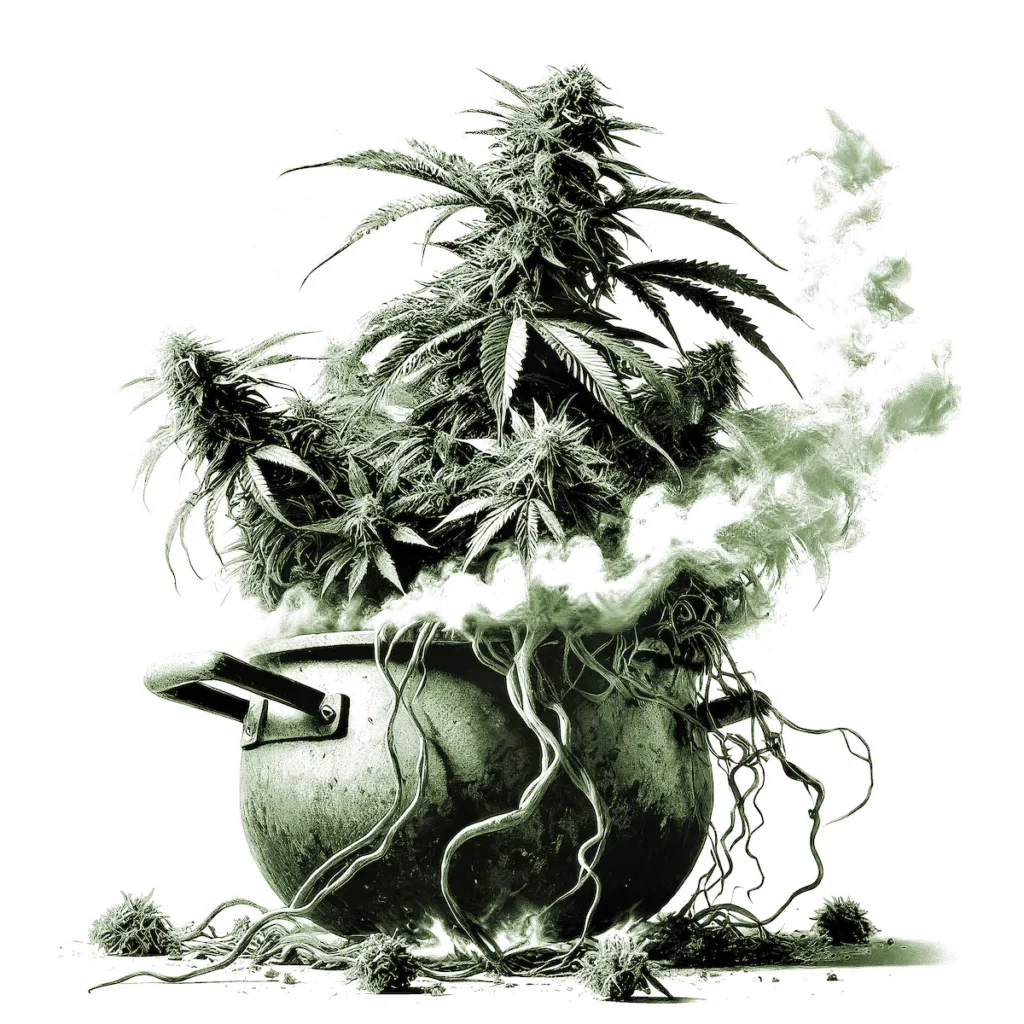
 The plant in the classroom
Education · evidence · cultivation · public health · archives · responsible practice
An editorial foundation for LIBERA HERBA: cannabis education as the missing public knowledge layer between myth, market, prohibition, medicine, cultivation and culture.
Join early.
Keep the archive open.
The VADEMECUM is becoming a living archive of guides, tools, notes and practical plant knowledge.
Free member access. Join early. Keep the archive open.
Join early.
Keep the
archive open.
The VADEMECUM is not just a book anymore. It is becoming a living archive of guides, tools, notes and practical plant knowledge.
Free member access. Join early. Keep the archive open.
The VADEMECUM is becoming a living archive of practical plant knowledge.
Free member access.