
HEBRARIUM

Prohibition did not only punish use.
It delayed knowledge.
That may be one of its deepest costs.
Cannabis was not merely kept away from consumers, patients, farmers or markets. It was also kept away from normal scientific development. Not completely. Research continued. Some scientists pushed through. Some discoveries were made. Cannabinoid chemistry advanced. Medical debates survived.
But the path was made harder than it needed to be.
And difficulty has consequences.
A plant cannot be understood properly when access is restricted, products are hard to study, funding is limited, researchers face administrative friction, and the material available for research does not match what people are actually using. The National Academies identified multiple barriers to cannabis and cannabinoid research, including restrictive regulations and policies, limited access to relevant products, funding limitations and methodological challenges.
That is not a cannabis slogan.
It is an institutional diagnosis.
The result is not simply “less research”.
This is the strange damage of prohibition. It does not only say “no”. It makes society less able to know what the “no” was based on.
For medicine, the cost is obvious. People used cannabis anyway: for pain, sleep, appetite, anxiety, nausea, seizures, pleasure, relief, habit, ritual, boredom, escape or necessity. Some benefited. Some were harmed. Some misunderstood what was happening. Some were sold promises. Some were given warnings without nuance.
What was missing was not opinion.
There was plenty of opinion.
What was missing was
enough well-structured knowledge.
These are not abstract questions. They are the questions that separate medicine from rumour.
The same applies to cultivation.
When a plant is pushed outside legitimate agricultural education, growers do not stop learning. They learn in secrecy. Some become brilliant. Some become reckless. Knowledge moves through grow rooms, photocopied manuals, forums, trial and error, whispers, myths, mistakes and underground expertise.
That history produced real skill.
It also produced noise.
A legal agricultural crop can be studied openly: substrates, pests, irrigation, nutrient response, lighting, genetics, disease pressure, post-harvest handling, worker safety, environmental impact.
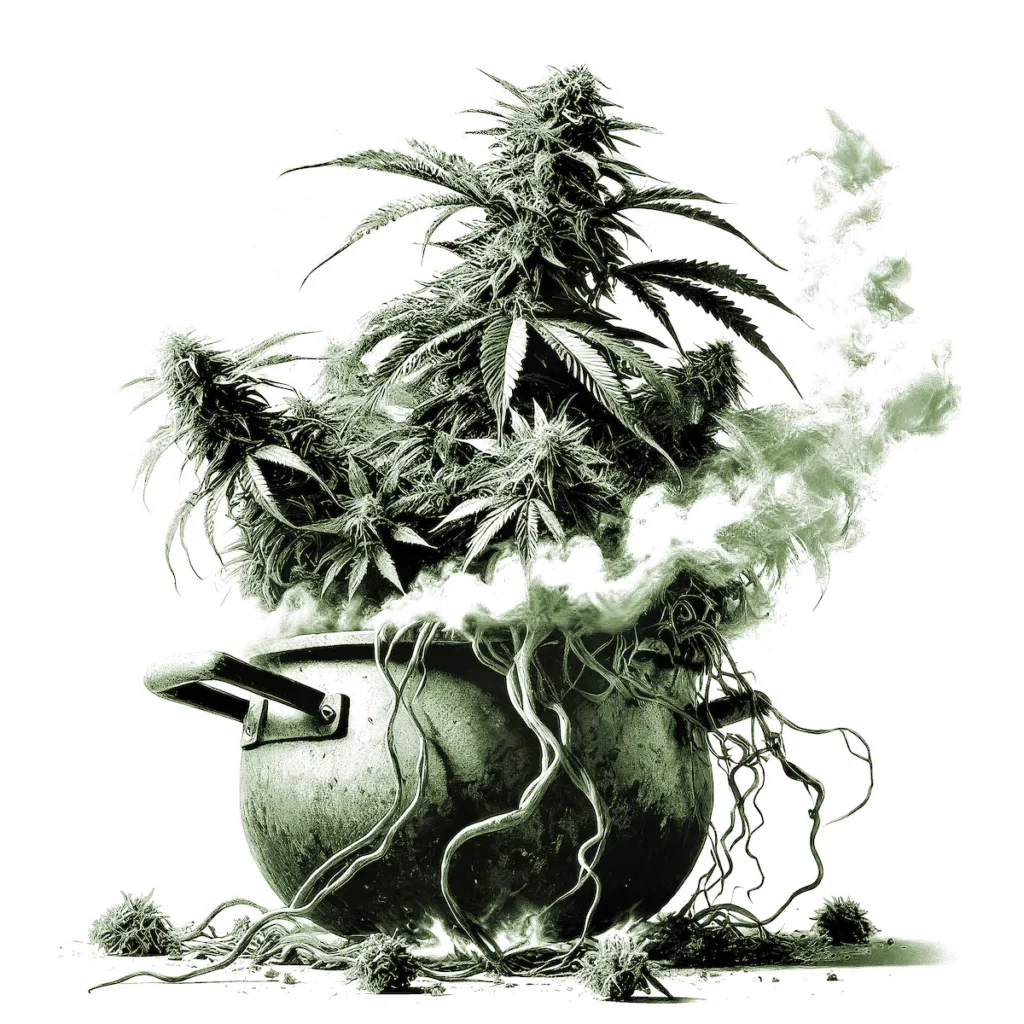
A prohibited plant learns in the dark.
That is not romantic.
It also makes future education harder, because later generations inherit both the knowledge and the distortion together.
This is where LIBERA HERBA stands.
The point is simpler and stronger: we should have known more by now.
Instead, cannabis became a field where law, fear and ideology often moved faster than evidence.
In the United States, the Schedule I classification placed cannabis in the most restrictive federal category, reserved for substances considered to have no currently accepted medical use and high abuse potential. That classification shaped research access, funding, approvals, material supply and institutional willingness. Even recent rescheduling debates have been framed partly around reducing research barriers and allowing better scientific understanding.
This does not mean rescheduling or legalisation solves everything.
It does not.
But open research gives society a better chance to correct itself.
Closed knowledge does not protect the public.
It leaves the public with rumours.
For LIBERA HERBA, this is the educational conclusion:
Prohibition did not only delay cannabis.
It delayed our ability to speak about cannabis intelligently.
That is why education is not an accessory.
It is repair.
Prohibition did not only punish use.
It delayed knowledge.
When research is restricted, society does not become safer automatically.
It becomes less informed.
People continue to use the plant, but doctors, growers, patients, regulators and educators have fewer reliable tools to understand what is happening.
Opinion filled the space
where evidence should have been.
The real medical question is not “is cannabis good or bad?”
It is:
Which preparation, which dose, which route, which condition, which patient, which risk, and which evidence?
When research is delayed, those questions remain open longer than they should.
A prohibited plant
learns in the dark.
Prohibition did not stop cultivation knowledge.
It forced much of it underground.
That produced skill, adaptation and innovation — but also secrecy, myth, unsafe practices and broken records.
Cannabis education is not here
to make the plant look innocent.
It is here to repair a damaged knowledge field.
The goal is not belief.
The goal is better questions, better records and better decisions.
Factual Note
Cannabis research has faced long-standing barriers, especially in jurisdictions where the plant has been treated as a highly restricted controlled substance. The National Academies identified barriers including restrictive regulations and policies, limited access to relevant cannabis products, funding limitations and methodological challenges.
U.S. Schedule I status placed cannabis in the most restrictive federal category, shaping research approvals, product access and institutional willingness. Recent rescheduling debates have included the argument that moving cannabis out of Schedule I could reduce barriers and expand research opportunities.
 The research that did not happen
Prohibition · research barriers · medicine · cultivation · public health · education
An editorial bridge for LIBERA HERBA: how prohibition and restrictive regulation delayed cannabis knowledge, leaving medicine, cultivation and public education to catch up after decades of fear, secrecy and fragmented evidence.
Join early.
Keep the archive open.
The VADEMECUM is becoming a living archive of guides, tools, notes and practical plant knowledge.
Free member access. Join early. Keep the archive open.
Join early.
Keep the
archive open.
The VADEMECUM is not just a book anymore. It is becoming a living archive of guides, tools, notes and practical plant knowledge.
Free member access. Join early. Keep the archive open.
The VADEMECUM is becoming a living archive of practical plant knowledge.
Free member access.